
The Public Relations Blog
We frequently blog about the latest public relations corporation communications, and marketing topics, tips, and trends. Our blog is one of the 100 Best Public Relations Blogs, according to FeedSpot. Please help yourself to our insights and be sure to subscribe to our weekly blog notifications.

A simplified definition of PR
What is public relations?
I get asked this question all the time. If I’m being honest, I sometimes have trouble narrowing it down into bits of information that someone who knows nothing about communications and marketing could understand.
The Public Relations Society of America defines PR as “a strategic communication process that builds mutually beneficial relationships between organizations and their publics.”
For those working in PR, you understand that no two days are the same. One day, you might be in a series of meetings with clients. The next day, you may be conducting research and sending out media pitches. And the day after that, you might be writing a news release and creating social media content. The list is never ending.
Read More
Topics: public relations, PR tips

A step-by-step guide to creating effective recurring meetings
Working with a PR agency requires regular communication and feedback. A good PR agency should strive to be an extension of your marketing team. It should keep you in the loop on marketing efforts to build awareness and brand identity for your company. But just how often should you be meeting with your PR agency?
Depending on the volume and urgency of a project, you might meet with your PR agency weekly, biweekly, or monthly. Every client is different. Larger programs or projects require more time and a higher frequency of meetings to strategize and coordinate.
You might meet more often at the beginning of your program to have your PR agency get familiar with your company and processes. But too many meetings can take up productive time that could be used more efficiently.
Read More
Topics: public relations, PR tips, strategy

The journey from seeking information to making a purchase decision!
The buyer's journey involves three stages:
1. Awareness Stage
2. Consideration Stage
3. Decision Stage
At each stage, you need to tailor your content marketing and sales strategy to fit into the buyer's context. Let's understand all three phases of the buyer's journey.
Read More
Topics: public relations, PR tips, inbound marketing

Effective strategies and tactics to boost your campaign
Working in public relations is all about strategy. Here are some quick tips to include in your PR strategy to be a trusted adviser to your company and clients:
Read More
Topics: public relations, PR tips
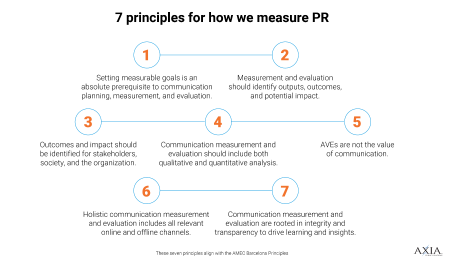
Measuring your PR and communication campaigns the right way proves its value
The Barcelona Principles provide best-practice guidelines to measure how well public relations and corporate communication efforts are working. PR isn't sales, yet measuring it correctly helps connect PR to real business results like sales pipeline activity, social media conversions, market share of voice, site traffic, and site rankings.
No marketing plan is complete without PR. An Entrepreneur article claimed “marketing without PR is like a dream without a goal.” And no marketing and PR plan will be able to prove value if not measured.
Read More
Topics: public relations, measurement

We live in a busy and hyper-competitive world.
Modern customers are impatient and want the web content to load within seconds. Delays may make them move to another source, and you may end up losing potential business opportunities.
If you care about leads, conversions, and customer delight, you should pay attention to your website’s load speed. Let’s take a look at how website loading time makes a huge difference.
Read More
Topics: public relations, online public relations, web design & development

How does your company use and benefit from earned media
Earned media is organic news coverage your company receives. It’s not paid for like advertising. People often confuse earned media with paid media even though they have two very different meanings.
The main difference is price. Earned media is not bought; it’s the outcome of having a product or service that other people want to talk about. Paid media, such as advertising, is promoted because you paid someone or a company to do that for you.
Social media mentions, media coverage, and reviews on your product or service are all examples of earned media used in public relations. Earned media happens naturally, and it’s a result of good PR.
Read More
Topics: public relations, PR tips, earned media

A great proposal starts with a great RFP
Public relations is critical to the success of a company. Your company’s unique needs are important, and finding a partner provider who can solve your problems is critical. A strong, clear request for proposals is the best way to help providers propose creative, relevant, and cost effective business solutions for you.
The PR Council offers a free RFP guide to help your company build an RFP that brings you proposals. These proposals work to solve your business challenges, not create more problems and a complicated process. We think it’s a good resource, and we wanted to share it with you here. Before you submit a Request for Proposals, make sure you're working with a proper PR agency.
Read More
Topics: public relations, PR tips

Crisis PR is key to a great crisis plan, so make sure your insurance helps you pay for it
When your company is in crisis, you’ll take in many sudden expenses that you’ll have to pay for out of pocket. This can strain budgets that used to be open or push your already tight budget to its limits. One of these expenses includes crisis public relations to manage your reputation in such a trying time. Having insurance help pay for crisis PR is a big help, but can insurance do that?
Read More
Topics: public relations, insurance, crisis communications

Use these questions to see if you’re working with an ad agency in disguise
You’ve recently started working with a PR agency. Everything looks good; they know what you want and the price is right. However, something seems…off about them now that you’ve established a business relationship. You can’t put your finger on it. They just don’t seem to be the PR firm you were expecting. In fact, they seem to be more of an ad agency. But how can you prove it?
Read More
Topics: public relations, PR tips



Comment on This Article