
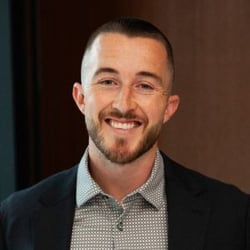
In this episode, Matt Mosich joins host Jason Mudd to discuss what separates professional speakers from aspiring speakers. From storytelling and stage presence to preparation, mindset, and memorable messaging, Matt shares practical insights from years of coaching executives, founders, and business leaders.
Tune in to learn more!
Watch the episode here:
Meet our guest:
Our guest is Matt Mosich, president and owner of The Mosich Group. Matt is a communication and speaker coach for executives, founders, and their teams. He helps clients prepare for and build keynotes, board presentations, podcasts, and media interviews.
5 things you’ll learn during the full episode:
- Why every point needs a story and every story needs a point
- How great speakers collect stories from everyday experiences
- Why audiences remember sentences, not speeches
- The hidden preparation behind seemingly effortless presentations
- How to use nerves as an advantage instead of trying to eliminate them
Listen to the episode here:
Quotables
- “There are probably thousands of people out there who can speak on your topic. They might have the exact same conclusions that you do. The only difference is how you arrived at them.” — Matt Mosich
- “The best speakers aren't more creative. They're better at noticing and writing down what everyone else walks past.” — Matt Mosich
- “People remember sentences, not speeches.” — Matt Mosich
- “Our mindset is how we observe the world; it's how we live our experience.” — Matt Mosich
- “You have to show up as a professional in order to get paid like a professional.” — Jason Mudd
If you enjoyed this episode, please take a moment to share it with a colleague or friend. You may also support us through Buy Me a Coffee or by leaving us a quick podcast review.
Resources
Guest’s contact info and resources:
- Matt Mosich on LinkedIn
- The Mosich Group website
- Jack Sernett
- Matthew Dicks
- The Four Agreements Book
- Toastmasters International
Additional Resources:
- Axia Public Relations’ SpeakersBureau service
- Listen to more episodes of the On Top of PR with Jason Mudd podcast.
- Find out more about Axia Public Relations.
- How to become a TED speaker
- The right way to apply for a speaking engagement
- Don’t let your superstar company speaker go unnoticed; promote today!
If you like this episode, you're going to love this:
- Embracing the power of “No” and storytelling
- How company executives can become powerful keynote speakers
- How to become an excellent TEDx speaker
About your host Jason Mudd

Jason Mudd is a nationally recognized public relations expert featured by CNN, Entrepreneur, Forbes, NPR, The New York Times, PRWeek, and The Wall Street Journal.
Named North America’s top PR leader by the World Communication Forum, he serves as Partner of Axia Public Relations — recognized by Forbes as one of America’s Best PR Agencies.
Jason has advised some of the country’s most admired and fastest-growing companies, leading campaigns for iconic brands including American Airlines, Budweiser, Dave & Buster’s, GE, H&R Block, Hilton, HP, Miller Lite, New York Life, Pizza Hut, Southern Comfort, and Verizon.
He’s also a professional public speaker, accredited PR practitioner, published author, entrepreneur, and host of On Top of PR with Jason Mudd — a podcast ranked among the top 2.5% globally by Listen Notes and a top 100 marketing podcast on Apple Podcasts. His guests have included leaders from Disney, Microsoft, Southwest Airlines, and Wells Fargo. Learn more about Jason at https://www.axiapr.com/team/
Find more On Top of PR episodes on:
Transcript
Episode Transcript
00:00:00 - 00:00:12
Matt
There are probably hundreds of people, thousands of people, tens of thousands of people out there who can speak on your topic. They might have the exact same conclusions that you do. The only difference is how you arrived at them.
00:00:12 - 00:00:38
Matt
And how you arrived at them is what makes it relatable, what allows people to actually see themselves in your journey and makes them consider that maybe they should take an action that you suggest. So every point needs a story because a lot of people can speak on your point. Your story is what differentiates it. It makes people actually want to act on
00:00:38 - 00:00:47
Announcer
Hello and welcome to On Top of PR. I'm your host, Jason Mudd, with Axia Public Relations. Today I'm joined by Matt Mosage with the Mosage Group.
00:00:47 - 00:00:49
Jason
Hi Matt, glad you're here. Matt is a communication and speaking coach for executives, founders, and their teams. He helps clients prepare for and build keynotes, board presentations, podcasts, and media interviews. His work lives where the pressure turns on. What a great expression, Matt. Welcome to On Top of PR. I'm really glad you're here, and I'm glad we're having this conversation today.
00:00:49 - 00:01:13
Matt
Glad to be here.
00:01:13 - 00:01:35
Jason
the topic is what professional speakers know that aspiring speakers don't. And for full background and disclosure, we decided to record this episode after Matt and I connected, and he was giving me some speaking recommendations and coaching me up on speaking a little bit. And I expressed to him this challenge that we see as a PR firm where we're helping corporations.
00:01:35 - 00:02:04
Jason
get their thought leaders, their executives, and their experts in front of key audiences, whether that's their industry or their ideal buyers, or just on a business stage of some sort. And we have found over the years, Matt, and this is what we're gonna talk about, of course, that aspiring speakers like executives, they don't, they want to think that they have the next phase of their career or the ability to be a public speaker.
00:02:04 - 00:02:31
Jason
a professional public speaker, I should clarify. And we have a lot of entrepreneurs coming to us saying, I want to be paid to speak. And so then I'm like, okay, what's your experience? What's your topic? You know, how how what have you done as far as a speaking resume? And they don't have a lot of that yet. And so I think it's kind of like, you know, saying like I want to be an actor on TV, or on the movie or the big screen, but they don't yet realize all the work that went into being able to do that.
00:02:31 - 00:03:00
Jason
And so I think we're gonna crack the code here a little bit, not only exposing our audience to the things that they don't know that kind of is a little behind the scenes, but also to help them and their executives help them prepare their executives to be ready to, you know, be in the big leagues like this. And I'm really thrilled that you're here because I know your background, we've had conversations, and this is gonna be very beneficial to our audience today.
00:03:00 - 00:03:08
Matt
I I think it will be and already as you're talking there's these moments, these stories that are already going on in my head and I can't wait to get into
00:03:08 - 00:03:12
Jason
Awesome. Well let's do that right now. So Matt, how did you get into this line of work?
00:03:12 - 00:03:31
Matt
Yeah. When I was twenty-one, I joined Toastmasters. I had an early inclination towards public speaking. I was a little bit less resistant than my class to raise my hand, which when I first heard heard of organization, was like, this is where I need to be. And
00:03:31 - 00:03:55
Matt
It came around a time when I was interviewing for what my life was going to be, and I was interviewing for this competitive wealth management internship. I ended up getting it. And I'm find myself sitting in this room with Harvard, Columbia, all these Ivy League other interns, and then there's me from San Diego State.
00:03:55 - 00:04:22
Matt
And I'm sitting there and I start to connect the dots. I'm like, I'm the one non-Ivy League student here. And I did all this public speaking and communication work. Maybe there's there's something here. And it was that day where everything just clicked. I came into this field of speaking through a different route than a lot of people do, which was I was obsessed with speaking and communication because I saw it was behind every single conversation. And nowadays I get to give back.
00:04:22 - 00:04:35
Matt
through the lens of coaching and on speaking. So got into it because it was just what seemed to me to be the the life skill that I needed to have. Did not expect that it would be how I gave back to the world though too.
00:04:35 - 00:04:46
Jason
Yeah, that's awesome. So you're telling me you had a journey that you were on and you ended up in an unexpected place or headed in an unexpected direction.
00:04:46 - 00:04:50
Matt
Yes, so is life.
00:04:50 - 00:05:11
Jason
I love it. I love it. You know, I think a lot of times like PR agency owners and entrepreneurs and CEOs, I know some of them and even marketing directors, right? Some of them early in their career were like, you know what, I want to be a CEO one day. But most of us, I don't think, start out that way. You know, I don't know, you know.
00:05:11 - 00:05:35
Jason
I knew I wanted to be in journalism early in my career. I didn't know I wanted to be in PR early in my career, but it became a natural evolution as I got more exposure into it. And so I think that's just a good point for us to kind of think about is, you didn't say this directly, but I've heard people say we all work in sales, whether we realize it or not, right? Where's the engineer is selling you that this bridge is gonna be safe for you to offer to the public, right?
00:05:35 - 00:06:02
Jason
The accountant is assuring you or selling you or convincing or persuading you that your books are accurate. And one of the best ways to do that is to be a great public speaker. I'm a big fan of Toastmasters. it opens a very easy door for people to get into public speaking. They make it easy for you to progress through the ranks. In fact, part of our company professional development is that every employee is is allowed to have or are encouraged to have.
00:06:02 - 00:06:13
Jason
a Toastmasters membership. And you know, it's very beneficial. So I was a member of Toastmasters for a while as well. And what's been your experience with Toastmasters?
00:06:13 - 00:06:33
Matt
I was in Toastmasters so from 21 through 29. Eight years I was I held pretty much every executive role that you could possibly have within the club. It was a huge boon for me and my speaking success. I would say about Toastmasters broadly, a big thing is just finding the right fit for you.
00:06:33 - 00:06:51
Matt
I have been, I've guested in clubs where it felt a little bit like a social club. And then I've guessed or where where I spent most of my time was a very business focused group with some really experienced speakers who took it seriously. We were on time, structured agendas. So everyone th there's a different club for everyone. And the big thing is that you find your your place.
00:06:51 - 00:06:57
Jason
Yes.
00:06:57 - 00:07:08
Matt
I eventually transitioned out. I I I had hired a speaker coach myself. And I was like, are there other ways to up the level of practice that I'm getting? Because I was finding myself maybe getting two to three minutes of speaking time a week for putting in a couple hours.
00:07:08 - 00:07:16
Jason
Right. Yeah.
00:07:16 - 00:07:17
Jason
Mm-hmm.
00:07:17 - 00:07:20
Matt
And he's like, yeah, there is. It's just expensive. And so I eventually just went the expensive route so I could really progress at a certain speed. But it's a great place to build a foundation for sure.
00:07:20 - 00:07:28
Jason
Yeah. Yeah.
00:07:28 - 00:07:55
Jason
I completely agree. That's why I encourage my team to be part of it. you know, it's accessible in almost every market so that, you know, it's not limited to a market where maybe one of our team members is located that's, you know, outside of where everybody else is. It builds a community around you, like you're describing. There's some social elements and it can be as intense as you want to make it, I think. and it's that fundamental step of getting in there. And I know people, you know, people that have been in Toastmasters for decades.
00:07:55 - 00:08:15
Jason
you were in it eight years. That's a lot longer than I was in it, but I still think there's a lot of value in it. And it was the baby step that, I needed to get better at what I was doing. And, eventually, like you said, some of us will graduate and go pursue and or seek out, you know, more advanced coaching or more one-to-one coaching might be the better word to express that. So speaking of, you've got value to add today to our audience. we've got about
00:08:15 - 00:08:20
Matt
Mm-hmm.
00:08:20 - 00:08:42
Jason
four kind of themes or topics we'd like to cover under this umbrella. And as I think about Toastmasters being a very safe place to enter and begin your journey. And then hiring a coach as the, you know, higher touch experience of which you are that coach, I think our audience is in for a real treat today as we're gonna uncover, kind of four things that are worth sharing. And certainly
00:08:42 - 00:08:52
Jason
we'll talk to our audience towards the end here of how they can get a hold of you if they want to explore taking their speaking and their skill sets to the next level. So does that sound good, Matt? Well let's jump right in then. one thing we wanted to talk about was every story needs a point. Every point needs a story. So help us understand you know, it sounds obvious from what you're saying, but I think a lot of times, we're not
00:08:52 - 00:09:07
Matt
sounds awesome. Looking forward.
00:09:07 - 00:09:13
Jason
critically reviewing our own work or our script or our presentations under this lens. So let's talk about that.
00:09:13 - 00:09:20
Matt
Yeah, I think the part that people might get more tripped up on in that line is the every point needs a story piece. I have this client and he speaks on the topic of adversity. Adversity.
00:09:20 - 00:09:28
Jason
Mm-hmm.
00:09:28 - 00:09:29
Jason
Mm-hmm.
00:09:29 - 00:09:48
Matt
We all face it. Why is he so qualified to speak on this broad topic that fits the entire human experience? If you look at him, you again wouldn't really guess it. He's 30, he has a bunch of tattoos, looks like an everyday dude, and acts like an everyday dude.
00:09:48 - 00:10:09
Matt
And it's the fact that he acts and looks like an everyday dude, which is why he can speak on adversity. His story, he's had 28 surgeries, he has chronic illness, I think he's also in the process of getting a kidney transplant, and he walks around with the most impeccable attitude of anyone I've ever met. And he has this gut-wrenching, life-altering story.
00:10:09 - 00:10:23
Matt
Of how he got there, the moments, the realizations, the shift in his attitude that came along the way. And because he's able to share that story, he's able to speak on that topic. There is someone out there.
00:10:23 - 00:10:35
Matt
There are probably hundreds of people, thousands of people, tens of thousands of people out there who can speak on your topic. They might have the exact same conclusions that you do. The only difference is how you arrived at them.
00:10:35 - 00:10:56
Matt
And how you arrived at them is what makes it relatable, what allows people to actually see themselves in your journey and makes them consider that maybe they should take an action that you suggest. So every point needs a story because a lot of people can speak on your point. Your story is what differentiates it. It makes people actually want to act on
00:10:56 - 00:11:03
Jason
So Matt, how do you figure out what your story is that's gonna make it unique to you as the speaker?
00:11:03 - 00:11:21
Matt
I think figuring out what your story is really begins in realizing that your story matters. So backtracking a little bit, my most vivid high school memory was being at a pool party, fumbling through a story, cutting out mid-sentence, to on cue the popular kid who I looked up to, beginning with his story, and just
00:11:21 - 00:11:32
Matt
Roar getting the room roaring in laughter. So I drove home that day thinking, if only I were a storyteller, and held that belief for what was then another ten years after.
00:11:32 - 00:11:52
Matt
10 years later, I'm reading a book, and it makes me start to consider maybe this idea that I've kept in the back of my mind isn't entirely true. So I started to test it. I started telling stories online, but every morning I would look at my screen as that cursor is blinking, glaring at me in the face. I'd eke something out and just move on with my day.
00:11:52 - 00:12:22
Matt
But one day I'm sitting at the gym in between sets and I notice something. I notice that I'm the only person in there who's working out without headphones. And there happens to be a reason behind it. So I wrote that down. I wrote that down and later that day I went and told that story. And that moment did something important. It made me become a collector of these moments. Anytime a moment would pass through my brain, I would write it down, and later I would go to write about it.
00:12:22 - 00:12:35
Matt
What that built, what is what is now an 8,500-word log in my notes of ideas, moments, stories, realizations that I now tell in client conversations, on stages, wherever I might be.
00:12:35 - 00:12:41
Matt
And it's funny I stumbled across this process, but now that I've found it, I realize a lot of people do the same thing. I've heard Matthew Dix, who is arguably the most decorated storyteller in the world, Morgan Housel, popular finance writer, or Tom Segura, comedian. I I've heard all on different occasions people talking about how, if you want to begin sharing these moments, you have to begin documenting them.
00:12:41 - 00:12:43
Jason
Mm-hmm.
00:12:43 - 00:13:01
Jason
Okay.
00:13:01 - 00:13:16
Matt
So back to finding your story, it really begins just with this curiosity that it's even worth finding, that it's worth collecting these moments. And over time you start to paint this picture and it and become aware of what your story is.
00:13:16 - 00:13:27
Jason
So you're saying the best speakers aren't more creative. They're better at noticing and writing down what other everyone else just forgets about or just lives and and moves on from in the moment. Okay.
00:13:27 - 00:13:33
Matt
Spot on. It's like how I think about it is you can't rely on this brain, you have to find a second one. I know if I ever try to just remember something I thought about earlier in the day, it doesn't happen. So it's just this quick instinct to write it down, and that's where it starts to evolve from.
00:13:33 - 00:13:38
Jason
Mm-hmm. Yeah.
00:13:38 - 00:13:42
Jason
Mm-hmm.
00:13:42 - 00:13:44
Jason
Mm-hmm.
00:13:44 - 00:13:55
Jason
Let's go back to the story you were talking about earlier. do you think that there are some people who are naturally more gifted as storytellers, or do you think it's a confidence element that they brought?
00:13:55 - 00:14:10
Matt
I believe that some people are disposed to something in their like bring up that makes them maybe more naturally talented. Like they they basically started on the journey with a better footing.
00:14:10 - 00:14:17
Matt
That said, going back to the point I just made, is I didn't believe I was a storyteller for 27 years. And I'd been in Toastmasters for six of those years. Obviously, I had developed some sort of a craft, but there was a visible, notable shift in the moment when I went from I'm not a storyteller to I am going to be a storyteller.
00:14:17 - 00:14:32
Jason
Right.
00:14:32 - 00:14:44
Matt
It is a skill. It is something you can learn. It does begin with allowing that possibility. So are some people naturally better? yeah, maybe they've been surrounded by people who are better storytellers and that gives them something to that that they just fall back on. But it is a hundred percent a skill. It is a hundred percent something you can learn.
00:14:44 - 00:14:52
Jason
Right. Gives them an edge. Yeah. Mm-hmm. Yeah, I like that, Matt. And you know, as I think about it.
00:14:52 - 00:15:17
Jason
Again, nature versus nurture, right? If you're around people in in your family or whatever who are great storytellers, my grandfather was a great storyteller. And, you know, so I imagine that gave me some edge because I understood consciously or subconsciously that he's a great storyteller. And you look for the pauses and the hooks and just the way they tell stories. And, you know,
00:15:17 - 00:15:22
Jason
I could tell the same story he's told, but he's he's gonna tell it better 'cause it's his story like you said earlier. Yeah.
00:15:22 - 00:15:31
Matt
Yeah. You don't have to look. I have a seventeen month old at home and he is constantly doing things that we're doing.
00:15:31 - 00:15:39
Matt
He's picking up on little cues and implementing them. We're not all too different from, you know, we're we we have accumulated a lot more skill. We have a lot more of a base, but we're always learning from people around us. There's a huge absorption process that happens, whether we notice it or not. So bringing it back to how do we become better storytellers, it can begin also with just increasing better inputs, finding people that you enjoy listening to and picking up on what they're putting out there too.
00:15:39 - 00:15:57
Jason
Mm-hmm.
00:15:57 - 00:15:58
Jason
Yeah, that's a great point.
00:15:58 - 00:16:10
Jason
I really like that you said is you had a mindset shift of telling yourself you're not a storyteller into telling yourself you're either going to become one or you're you are one or you're a great one.
00:16:10 - 00:16:23
Jason
And that's something that I've been, you know, working on for years is improving my mindset, right? And convincing my mind of what I already am or that I am instead of, you know, negative self talk, you turned it positive self talk.
00:16:23 - 00:16:23
Matt
Yeah.
00:16:23 - 00:16:27
Jason
Do you run into that challenge when you're coaching others about being a great speaker?
00:16:27 - 00:16:37
Matt
yeah. The piece of that story that I didn't dive deep into is what was the catalyst for the shift. Like when did I start to actually think maybe I could be a storyteller? And it was while reading the four agreements. It was while reading the four agreements, popular book that just what it what it did for me. I walked in totally unaware of these narratives I'd been spinning in my own head. There were three that were top of mind.
00:16:37 - 00:16:52
Jason
Mm-hmm.
00:16:52 - 00:17:15
Matt
I'm not a storyteller. I'm not a salesman. I'll never be an entrepreneur. I am a storytelling, selling entrepreneur four years later. So something different happened just through that awareness and a shift in my identity. When I am meeting with people, I often listen for different cues like that. The I can'ts, I won'ts, I'm not. Because if we can't,
00:17:15 - 00:17:20
Jason
Mm-hmm.
00:17:20 - 00:17:23
Matt
if we can't allow ourselves to get through something, then we won't ever get through it. it doesn't even have to be I am. It can just be maybe. That's all it was that day it was maybe. Maybe I can be a storyteller. Maybe I can sell. Maybe I can be an entrepreneur. And I started to accumulate little moments. I started to build what I call my internal library of examples that pointed towards the opposite. So yeah, I listen for those all the time and counter it with my clients all the time.
00:17:23 - 00:17:41
Jason
Yes.
00:17:41 - 00:17:48
Matt
Because it's not an exponential shift immediately, but when you start to compound those things, it really is where things start to change.
00:17:48 - 00:18:01
Jason
You mentioned a client earlier, and he's overcome adversity. He's an adversity speaker, and I imagine that probably part of his narrative or his story is mindset.
00:18:01 - 00:18:23
Matt
Yeah, and let me give him a quick shout-out. Jack Sernett, the guy is someone that anyone can learn from. And it really does come down to mindset. And and that's what makes him so special, is he has faced all of this adversity, and yet he still looks at life as if it's the best thing that's ever happened.
00:18:23 - 00:18:37
Matt
So it's I I heard someone say one time, mindset, like what is what is all that stuff? What's it all cracked out to be? And at the end of the day, it's also what we call life. Our mindset is how we observe the world. It's how we live our experience. When something comes to us, it's filtered through what's going on in here, whether we make the decision, whether we hold back. So yeah, it it all does come down to that. And he speaks a lot on it.
00:18:37 - 00:18:49
Jason
Sure. Mm-hmm.
00:18:49 - 00:19:12
Jason
Nice. Yeah, I do think you get what you want what you want or what you expect. So if you expect something's not going to be a good time and it turns out to be a good time, imagine how much better of a good time it would have been if you started out expecting it to be a good time, you know? so I I don't want our audience to miss this point you made earlier about the best speakers aren't more creative. They're better at noticing and writing down what everyone else, overlooks.
00:19:12 - 00:19:26
Jason
Any other tips or techniques that you've coached clients on on thinking about how do you write it down? You know, what's a trigger and then how do you document it? 'Cause I'm sure not everybody will want to document it the same way that you do.
00:19:26 - 00:19:42
Matt
Yeah. And the process that I shared with you, the one that I that that was ultimately really helpful for me, isn't the one I teach. It's it's too fluid. It requires a little bit too much like I was just so motivated to do it that it worked out for me. It wasn't very structured.
00:19:42 - 00:19:42
Jason
Okay.
00:19:42 - 00:20:09
Matt
The process that I teach, I actually learned from Matthew Dix. And if your audience doesn't know Matthew Dix, probably don't. He is a phenomenal storyteller. Look him up on YouTube. He has won 60-something stages at the mob and is a phenomenal teacher. The cornerstone of his practice is what he calls homework for life. Homework for life is a very similar process to what I did, just with more structure to it.
00:20:09 - 00:20:31
Matt
Every day, and I I do this nowadays too. Every day you go into an Excel file and do two things. You write the date and you write a moment. It could be a story or it can just be something that you want to remember from the day, and that's it. Every day you're collecting a moment. The question behind it is what's the most story worthy moment from today?
00:20:31 - 00:20:53
Matt
not every day has the biggest story, but every day has something worth remembering. And just getting in that process of starting to observe the stories and in a process of reflection, you start to build these this this log of stories. And just yesterday, I went through my my homework for life, took down three stories that I've since written and will eventually be posting on social media.
00:20:53 - 00:21:05
Matt
Which also become stories that I share in client conversations, that I share on stages. It's just that process of building out the moments themselves. It begins with homework for life.
00:21:05 - 00:21:33
Jason
So, real quick, a note to our audience with your help, Matt, we will add in the episode notes a link to Matthew Dix and a link to your client and just any of the other things we talk about during this episode for their convenience. So they don't have to be taking notes maybe while they're driving or pause because or or whatever it might be. So the episode notes will be available on our website for everybody at ontopa.com slash Matt dash Mosage.
00:21:33 - 00:21:37
Jason
And we'll and that's M-O-S-I-C-H, correct? and so that'll make it easier for everybody. Matt, as I'm thinking about what you're describing, Matt, if you take a moment to make take these notes every day and be intentional about it, I bet it also helps you improve your memory or your recall of the stories as well. that's one of the things I was kind of thinking about in the back of my mind when you were describing it, because
00:21:37 - 00:21:58
Matt
That's it.
00:21:58 - 00:22:25
Jason
As we talked about earlier and perhaps before we hit record, you know, there's moments in my life that just kind of pass me by and I don't think about them ever again. And then they were meaningful to someone else when they bring them back up and remember that time we did whatever and or we heard whatever. And I'm like, a little bit, you know, but clearly it wasn't as meaningful to me to me as it was to them. But, you know, I think that's the benefit of journaling and writing things down, is it just makes us think about them twice.
00:22:25 - 00:22:31
Jason
And maybe if we read our notes again a third time and I don't know about you, but you know, third third time it kind of sticks to me.
00:22:31 - 00:23:00
Matt
Agreed. I've heard people describe that when you're remembering something, you're not remembering it, you're remembering remembering it. So when you actually take these moments down and review them periodically, it does exactly what you're talking about. It actually just brings back memories. It it it allows you just to relive your life. So there is the benefit of accumulating a list of stories that you can share or fall back on, but it also just becomes a process of remembering the cool moments that happened in your life that you'd otherwise forget.
00:23:00 - 00:23:02
Matt
And that's pretty cool.
00:23:02 - 00:23:16
Jason
Yeah, well speaking of memory, this the third point I think, or the second theme we want to uncover here, the second theme is people remember sentences, not speeches. is that does that mean people remember sound bites?
00:23:16 - 00:23:25
Matt
Pretty much. So where it came from, my favorite podcast episode I've listened to so far this year. This one will maybe trump trump it eventually. Kidding. But it was January. I was listening to this podcast. It's called How I Write, and Morgan Housel was the guest. I was taking notes fervently. I must have seven or eight different quotes.
00:23:25 - 00:23:31
Jason
Mm-hmm.
00:23:31 - 00:23:38
Jason
Okay.
00:23:38 - 00:23:57
Matt
If I tried really hard, I might be able to remember maybe another one. But the one thing that still sticks in my mind is that how he phrased it was people don't remember books, they remember sentences. And how I reframed it in my own world is people remember sentences, not speeches.
00:23:57 - 00:24:11
Jason
Yeah.
00:24:11 - 00:24:16
Matt
When I was especially early in my speaking days, I had this, it was a a good desire. It came from a good place. It always comes from a good place where I wanted to give my audience so much. So I gave them everything. What that ultimately means is I gave them nothing.
00:24:16 - 00:24:24
Jason
Right. Right.
00:24:24 - 00:24:34
Matt
We are lucky as speakers, as educators, as people. If people remember one thing that we said a year from now. So I now take that when I'm building talks, when I'm helping clients build talks, to intentionally build these messages around.
00:24:34 - 00:24:56
Matt
A few key moments, a few moments that they might actually remember, and it's through remembering that they actually end up doing. For example, I gave a talk in March on trust, and I built the entire talk around the line that trust is not earned by being the most interesting person in the world. It's built by making people feel like they are.
00:24:56 - 00:25:07
Matt
little lines that just conclude a point, that change people's thinking, or might even be a play on words. Ultimately the goal is to be memorable, and that's what actually makes it actionable.
00:25:07 - 00:25:34
Jason
I like that. And to take that a step further, you're reminding me of research I read a long time ago that for every hour or 50 minutes of a keynote, the average audience member is gonna have one minute that really stood out to them, one minute that they, you know, that moved them, motivated them, or summarized the experience for them. And what I learned early in my career is for every person that can be a different moment. So
00:25:34 - 00:26:00
Jason
We would go at my PR firm, for example, we would go to Public Relations Society of America luncheons. and so afterwards, since I was paying for it, you know, I would ask the team, like, you know, what would what'd you what'd you benefit, what'd you learn from, or whatever. And there would be moments where I would be like, Were we at the same thing? Cause I don't remember hearing that sound bite, that tip, that comment, or whatever it might be, at all, you know.
00:26:00 - 00:26:27
Jason
And so to me, the clear answer would have been A or B. And you'd hear people say C, D, E, and F, and you're like, huh, I don't remember that for a minute. And so I think that really spoke to me early in my career, like I said, in a way that made a lot of sense to me that, you know, everybody's got a moment like you're describing, and it may be completely different. And to your point also, Matt, that you know, you could give a one hour
00:26:27 - 00:26:49
Jason
presentation or speech and you motivated somebody that that creates a permanence in their mind about a point maybe you didn't even think were one of the key points of your whole message. And I've also heard the expression, I'm sure you have too, that you know, people don't remember what you tell them, but they remember the story that you told them. And I think that was the moment where I realized how important storytelling is.
00:26:49 - 00:26:57
Matt
Yeah. There's data that backs it up to say there the the ranges are different, but six to thirteen times more memorable than facts and data alone. When you're talking about the people resonating to different things, there's another idea that it's kind of why I'll reread books is because it might have meant one thing to you at one point, but you're a different person when you read it a couple years later.
00:26:57 - 00:27:08
Jason
Yes.
00:27:08 - 00:27:12
Jason
Yes.
00:27:12 - 00:27:13
Jason
Right.
00:27:13 - 00:27:26
Matt
you're gonna connect with what's connecting with you right then. There's different moments where it might happen. But if you can bring in your story and bring in you and the different elements of you, you bring in different elements where people connect can't connect to.
00:27:26 - 00:27:49
Jason
Yeah. That's very good. Very true. Yeah, that's why I have certain books I read every year, you know, because there's so much gold inside of them. There's other books you study and you mark up a while or quite a bit. Matt, I want to move us into the next theme we want to cover, because this is obviously important for our audience, that we help them understand what professional speakers know that aspiring speakers don't know yet. And
00:27:49 - 00:28:14
Jason
I love this comment that you've got to share here about how effortless requires a lot of effort. And so, I think sometimes our clients have had positive experiences speaking internally to their direct reports or maybe to the entire company and the company creates a very supportive environment for them. But you put them on a stage at a conference where people spent thousands of dollars to be there and they're the
00:28:14 - 00:28:31
Jason
the speakers they're competing with are perhaps, people who make a living doing speaking. And they do so effortlessly, right? And so I think sometimes people see other people speak and they're like, that seemed easy. I could do that too. But there's a big distinction here, Matt. Tell us more.
00:28:31 - 00:28:59
Matt
Yeah, I think the best example I can point to is Chris Rock. He is known before every tour to bomb 50 times on purpose. He's known to frequent this club in New Jersey called the Stress Factory. And he'll walk in unannounced. We got a crowd of, I don't know, 40, 50 people, pretty excited because Chris Rock all of a sudden just showed up. He'll walk up on stage, a little notebook in hand, and he'll just riff. He might start a
00:28:59 - 00:29:09
Matt
Joke and cut it off mid-sentence. He might refer to his notes and he's taking notes the whole time. If if it wasn't him up on stage, you would probably have booed him off stage and told him to like see you later. But it's him, so you give him that grace. But it's it's what makes him great. I have sat across from aspiring speakers before who have told me that they don't want to speak for free. They don't
00:29:09 - 00:29:15
Jason
Yeah.
00:29:15 - 00:29:23
Jason
Mm-hmm.
00:29:23 - 00:29:24
Matt
Do the Rotary Club, they don't want to go to the Chamber of Commerce, they got an offer from a conference, but they won't pay them, so they won't do it. Yeah. It it is hard, I get it, because I I track my time and I know how much time goes into these keynotes, presentations, trainings. Like there's a lot of effort that people don't see, even without the additional reps.
00:29:24 - 00:29:30
Jason
Right.
00:29:30 - 00:29:37
Jason
I know those same people.
00:29:37 - 00:29:46
Jason
Mm-hmm.
00:29:46 - 00:29:58
Matt
But the reality is, the people that you see giving TED Talks, the Chris Rocks that have the Netflix specials, there are hundreds of reps and not just reps to rehearse, reps to learn that go into it. So it's a lot of effort.
00:29:58 - 00:30:01
Jason
Mm-hmm.
00:30:01 - 00:30:27
Jason
So let's talk about that a little bit deeper. So, for example, I've got friends who and clients and contacts who have done, TED talks, some of them have been TED X talks. And the one thing they tell me is, you won't believe how much they made me rehearse. You won't believe how many times I had to present it in front of the coach or committee or whatever until I got it to meet their standards. And part of me is like, Yeah, yeah, I will believe, you know, I do believe.
00:30:27 - 00:30:54
Jason
Because I know how important those moments are, not only for the organizer, but also for the speaker themselves, their reputation and the first impression that they're making, right? So we're all busy and people are spending good money and hard-earned money and and a good amount of their time to attend and be present, and they're gonna be present for your presentation. As the presenter, you owe them to come in prepared, rehearsed.
00:30:54 - 00:31:09
Jason
and ready to do your presentation. and I guess where I want to go with that, Matt, is to get your insight not only on the level of preparation. Well, let me ask you this first. What's the level of preparation that you give to your clients for these important moments?
00:31:09 - 00:31:11
Matt
Well, let me first
00:31:11 - 00:31:34
Matt
Give a little reframe here on why preparation matters. I once heard a keynote speaker share a story that after he walked off stage, a woman walked up to him and she was like, you know, so many speakers, they they waste our time. You just spoke to a room of a thousand people for 60 minutes. You just took 6,000 hours of time. And you're one of the few people I've seen that actually earned it.
00:31:34 - 00:31:38
Jason
Wow. Yeah.
00:31:38 - 00:31:43
Matt
But that's how I think about it nowadays. If I'm speaking to even a room of 25 people for 60 minutes, I just took a whole day of people's time. I want to at least honor them. And that's the same thing I talk about with clients is even if something doesn't matter to you, even if it's the Rotary Club, the Chamber of Commerce, you're still your people are still granting you their time. And there's something that should be honored to them.
00:31:43 - 00:31:48
Jason
Mm-hmm.
00:31:48 - 00:32:01
Jason
Mm. Yeah.
00:32:01 - 00:32:05
Jason
Right.
00:32:05 - 00:32:31
Jason
Yeah, I completely agree. You know, an audience of one, right, should be enough reason to, be your best and show up prepared and be great about it. Matt, this is leading me to start thinking about something else I talk about with our clients. And I've gotten pushback on this, so I'd love to hear your thoughts, which is to me, I highly recommend, if not perhaps even insist, that a person who does not make their living speaking.
00:32:31 - 00:32:57
Jason
do something that people who do make a living speaking do that most you know amateur speakers or people who are new to speaking haven't even considered and often won't consider which is this that they should have one topic that they focus on, rehearse, that we market them for, and that they do the reps as you called them earlier, dozens of times before they start entertaining
00:32:57 - 00:33:25
Jason
the ability to have a second topic or do what I call, you know, request topics where, you know, they're like, hey, could you come speak to our group about this? And that's a perfect moment for you to have a topic you've already thought through that you want to do and test in front of a test audience, I think, after you've done all those things. But I think too many people think, and this is where I'd really like your thoughts, Matt, on the idea that, you know, they're a pretty good speaker, they think. So they think I can improvise.
00:33:25 - 00:33:51
Jason
And get in front of an audience of, you know, six, sixty, six hundred, six thousand people and just improvise because I've got this natural leadership and presentation style that I think is pretty good. but you and I know that a professional public speaker is polished, but rehearsed, and they have blocking and staging and pauses and all of these things that most people aren't thinking about at this level.
00:33:51 - 00:33:59
Jason
But when you hear a great presenter speak, it's because they've done all these things. Matt, do you hard disagree with me on this? Do you are we on the same page?
00:33:59 - 00:34:25
Matt
No. We're so on the same page. Let's let's think about it this way. You would never expect for yourself to be able to just throw on a set of paths and walk into an NFL arena and say, I'm gonna do it. Like this is gonna work. You wouldn't expect to pick up a guitar and just strum it because I mess around at home sometimes and I can just go perform to an arena.
00:34:25 - 00:34:52
Matt
There's something about communication that's funny because we do it every day. So we don't think that we need to give it the same level of preparation and intention that we do to other things. But giving a talk, delivering a presentation, there's something different about it when it comes to really trying to get people to take an action, to have that memorable moment, to be impactful for someone.
00:34:52 - 00:35:11
Matt
For a lasting period of time. And that's when we think of the best speeches, the best speakers, they treat it like a professional art. If you want to be paid, if you want to be a professional, then you have to give it that same attention. That's how I'd comment on it.
00:35:11 - 00:35:41
Jason
Yeah, I love that. Matt, would you agree? I just thought of this really, but you have to show up as a professional in order to get paid like a professional. And and I think that's kind of like saying, you know, dress for the job you want, not the job you have. And and there's other little cliches like that. But at the end of the day, if you want to be a professional speaker, then you've got to show up like you are that professional speaker. I think it starts with mindset. I think it starts with the work ethic and the reps that you talked about earlier. And then I think it
00:35:41 - 00:36:05
Jason
also shows up as paying it forward and wanting to be helpful. And as you said, so well. And I love the idea of just, you know, if your audience is 600 people, then you're asking for 600 hours of attention. And, you know, certainly if you've got a presentation and it's let's say there's 600 people, 6,000 people in the conference, that's a big stage, right?
00:36:05 - 00:36:21
Jason
I'm pretty sure you didn't spend six thousand hours preparing for that one time presentation, but there should be some sort of weight on your shoulders that you're feeling about the responsibility that you have and the responsibility you owe to that audience to show up well.
00:36:21 - 00:36:48
Matt
Yeah, and I think to add to that point too, you you mentioned the weight, the weight of it. And people also can get tripped up on that. Where a lot of people come to me and they say that, Matt, I don't want to be nervous. I need this nervousness to go away. And there is a difference. There is the crippling anxiety where I can't do it. And then there is pressure. And I think a lot of people come to me and they're like, hey, I've done reps and this pressure needs to go away.
00:36:48 - 00:37:16
Matt
You don't want it to. I once set out to do a six-month research presentation at the time. It was four years ago. It was still early in my speaking days, but I was passionate about this topic of money. Not just money, but what is money? So I decided to really explore the question. I spent four months researching, a month crafting the talk itself, and a month rehearsing it. I must have rehearsed over 80 times.
00:37:16 - 00:37:21
Matt
When I actually walked up on stage, it was like nothing was there. I didn't even care.
00:37:21 - 00:37:43
Matt
And I totally bombed. Now that's not to say that there was the only reason, but a big part of it comes down to what Dale Carnegie said. To be interesting, be interested. And when I was up on that stage, I wasn't interested anymore. So nowadays, when I'm actually about to walk up on a stage and I'm feeling that pressure, I smile at it. I smile and I say, this means I care. this means I'm doing something important. There's actually studies that have been done just by simply shifting your framing.
00:37:43 - 00:37:50
Jason
Yes. Mm-hmm.
00:37:50 - 00:38:02
Matt
From I'm nervous to I'm excited, that there's literally a physiological difference and a measurable difference in how you perform. So we want the pressure. It means we care, and it actually helps us too.
00:38:02 - 00:38:21
Jason
Right. It also, you know, and I'm not a neuroscientist at all, but you know, it's telling your body is telling you this is important, this is an an important moment. And you know, I love that feeling of that pressure. And, you know, when it when it works out for the best, they call that positive stress, right? Because you were stressed in a positive way, not stressed in a negative way, like I'm about to get hurt or harmed.
00:38:21 - 00:38:27
Matt
Mm.
00:38:27 - 00:38:47
Jason
Right. And then when you conquer it and you're successful, that builds up your confidence for next time. So you know, Matt, we we did a great job here, I think, of covering our final point about how nerves are the point and that people are obsessed with eliminating nerves, but it's an asset if you learn to channel them, right? Yeah. W was there anything else you wanted to talk about or cover on that point of of nerves or the point, or just anything else that you think is worth sharing with our audience?
00:38:47 - 00:38:57
Matt
Sure. Yeah, it's fun.
00:38:57 - 00:39:06
Matt
I think we hit the big things. if we take anything away from today, it's not that you shouldn't want to be a speaker. Because what we've talked about a lot today is it's a lot of work. There's nothing, I don't think that's a reason to shy away. It's just something to accept. If we want to do this well, we treat it like a profession. We treat it like the profession that we've already the the the reason that we're actually going for this in the first place, the profession that we actually earned all this experience in.
00:39:06 - 00:39:15
Jason
Mm-hmm.
00:39:15 - 00:39:23
Jason
Mm-hmm.
00:39:23 - 00:39:28
Matt
It's a craft in and of itself. It's a profession in and of itself. It deserves that same attention. Not a bad thing. Just a thing.
00:39:28 - 00:39:57
Jason
Yeah. Yeah. What I love about speaking is that it could feel like a calling, right? And if you feel the call, you should answer it. But it's also not something like, well, I'm not seven foot tall, so I can't play in the NBA, right? The barrier to entry, in that regard is pretty accessible. I've seen people take stages before or a person take stage before that had basically no limbs, you know? So
00:39:57 - 00:40:17
Jason
There's a lot you can do, regardless of your physical stature, your previous experience, because I believe everybody has a story to tell. And it's just a matter of doing the work to prepare for it and finding your story and getting better at it a little bit every day. Matt, if our audience wants to get a hold of you, LinkedIn is a good way to do that, I assume.
00:40:17 - 00:40:27
Matt
LinkedIn's the best place to contact me. It's where I post a lot of content, a lot of stories. And if you took anything away from this episode, please shoot me a message. I'd I'd love to hear it.
00:40:27 - 00:40:50
Jason
Yeah, that would be great. I encourage our audience to do that. I want to thank you for coming on on top of PR and helping our audience stay on top of PR. my vision for today that the audience as our listeners, would take this opportunity to ask themselves a couple of questions. And that would be one, you know, do they feel a calling to telling their story on public stages?
00:40:50 - 00:41:12
Jason
and if so, I would want to encourage them to pursue that. and to take the advice you shared here, get in touch with you about, you know, maybe you can offer them guidance as well in coaching when they're ready. And then secondly, if they've got somebody knocking on their door at their company that wants to speak, to encourage them in the same way that we're trying to encourage them today, to look at it with the expectations of.
00:41:12 - 00:41:32
Jason
You are making a withdrawal of people's time. So the deposit you give back to them needs to be pretty significant. And one way to ensure that you're giving significant value is to prepare, rehearse, get a coach, get coached, be open to receiving coaching and just keep doing it would be my advice. Matt, anything else to add to that?
00:41:32 - 00:41:37
Matt
No, that's spot on. You hit it right on the head. I have nothing else to add to that. You're you you really did.
00:41:37 - 00:41:51
Jason
well thank you. That's very kind of you. I appreciate that. Matt, I'm glad we did this. the coaching session that you and I did together was very valuable. And I'm excited to see where this episode goes from here and building our relationship beyond it.
00:41:51 - 00:41:57
Matt
By all means, Jason. Thank you for having me. It was a pleasure. And thank you for everyone listening. cheers.
00:41:57 - 00:42:23
Jason
Yeah, thank you, Matt. We appreciate you. And we appreciate our audience too. We know that we have a very loyal audience. We don't take that for granted. We're very thankful for your investment in On Top of PR. and speaking of, if you've enjoyed this episode, please take a moment to share it with a friend or colleague you think would benefit from it. And if you've enjoyed this podcast over the years, thank you for your loyalty and your support. If you want to take a minute to leave us an online review, that would be very helpful and helpful.
00:42:23 - 00:42:30
Jason
more people find us and help encourage us to keep doing a great job here of bringing you value and helping you stay on top of PR. With that, this is Jason Mudd from Axie Public Relations signing off. I hope something great happens to you today. Be well.
Topics: On Top of PR, public speaking



Comment on This Article