

Almost every day, a prospective client asks us, "How many reporters do you know?"
At first, this seems like an important question. After all, knowing reporters should make it easier to land media coverage, right? The assumption is that connections are everything in public relations. And while relationships are crucial, there’s a much deeper game at play.
So, what if I flip the script? Here’s a better question to ask us: "How many reporters know you?"
That sounds more strategic. Getting on a reporter’s radar is key, but even this question misses the mark slightly. Let’s take it a step further.
The best question to ask is, "How many reporters trust you?"
You can know every journalist in the country, but if they don’t trust you or believe in the stories you bring them, it won’t matter. In the world of media, trust is the foundation of every successful PR campaign.
But even trust doesn’t guarantee you coverage if your story doesn’t have legs.
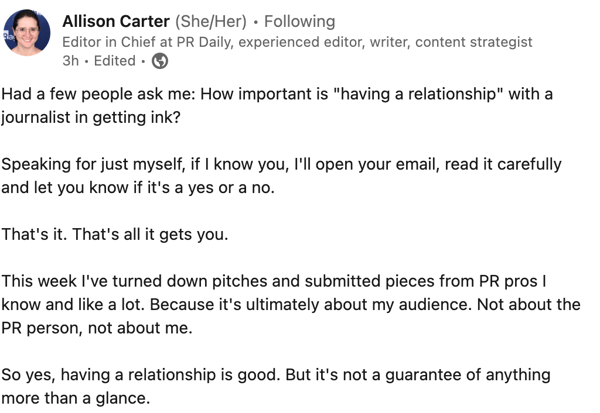
Here’s the reality: It’s not about who you know or even who knows you. It’s about the story you bring to the table.
Getting coverage is all about these two things:
- Do you have a good, newsworthy story?
- How well can you present, frame, and pitch that story to the right outlet?
Whether it’s The New York Times, The Wall Street Journal, TechCrunch, NBC News, or even The Mayberry Monthly, journalists care about one thing above all else: their audience.
I could be an editor’s best friend, but if my story isn’t compelling for their audience, they won’t run it. That’s because media outlets don’t operate based on favors or friendships. They operate on the need to inform their audience about the most newsworthy topics.
Serving their audience is the lifeblood of their business. If they run stories that don’t resonate, their readers or viewers tune out. And when an audience tunes out, journalists lose credibility.
When credibility falters, it’s a slippery slope. Advertisers pull back, subscriber numbers drop, and revenue dries up. This is why editors and reporters can’t afford to run stories based on relationships or connections alone. Every story must be justified by its relevance to the audience.
So, it doesn’t matter how well you know a journalist or how many coffees you’ve had with an editor. If your story doesn’t align with their publication’s mission and audience, they won’t pick it up.
That’s where pitching comes in.
You have to present your story in a way that immediately grabs attention and connects with the publication’s audience.
Journalists are inundated with pitches every day. Most of these pitches are irrelevant or poorly framed, and they end up in the trash bin. But a pitch that clearly and succinctly demonstrates why the story matters to the publication’s audience? That’s what journalists will notice. That’s what earns coverage.
Think about it: Journalists are the gatekeepers of information. They determine what gets shared with the world, and they make those decisions based on value. If your story doesn’t bring value to their audience, no amount of schmoozing or networking will change their mind.
So, how do you ensure your pitch gets through?
Crafting a good story
First, you need to ask yourself: Is my story truly newsworthy? It’s easy to fall into the trap of thinking your company’s news is groundbreaking, but take a step back and view your story from a journalist’s perspective.
What will the journalist’s audience care about? Is your story timely? Is it relevant to current trends or discussions? Does it solve a problem or offer a new perspective?
Once you’ve established that your story is newsworthy, the next step is to frame it effectively. This means tailoring your pitch to the publication, the journalist, and most importantly, their audience. No two pitches should be the same. Each outlet’s audience is different, and so are their priorities.
Building trust with journalists
Over time, as you consistently bring reporters valuable, well-framed stories, they’ll begin to trust you. They’ll know that when they see your name in their inbox, it’s worth opening that email. They’ll trust that you understand their audience and will only bring them stories that align with their needs.
That trust is what builds strong, long-lasting relationships in PR. And yes, once you’ve built that trust, you may find that journalists start coming to you. They might reach out when they need a source or are looking for a new story angle. But remember, this trust is built on value, not on how many reporters are in your contact list.
The bottom line
The best question isn’t “How many reporters do you know?” or even “How many know you?” It’s
“How many reporters trust you to deliver newsworthy stories that will engage their audience?”
Focus on the quality of your story, how you present it, and the trust you build with journalists. These are the real drivers of media coverage.
Need expert guidance on media relations? Read Axia’s "Learn Media Relations from the Media” e-book for insider tips on pitching and earning media coverage.
Photo by August de Richelieu from Pexels
Topics: media relations, earned media, news media



Comment on this article