
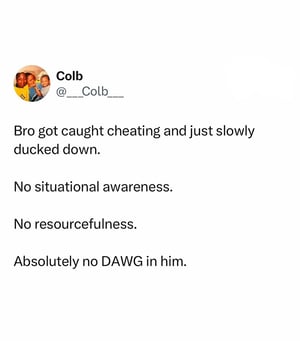
 When a TikTok video allegedly showing a CEO cheating at a Coldplay concert went viral, it wasn’t because of who he was — at least, not at first. The moment exploded because it activated four of the internet’s most powerful engagement triggers: voyeurism, drama, ambiguity, and high stakes.
People couldn’t look away.
Audio: Listen to this article.
But this wasn’t your average celebrity scandal. There were no PR teams, gloss, or script. The footage felt real and unscripted, which gave it credibility and reach.
It started as a mystery. Who were they? What happened? What’s the full story?
In that vacuum, the internet did what it always does. It filled in the blanks — with projection, speculation, judgment, and content.
Why this moment hit viral velocity
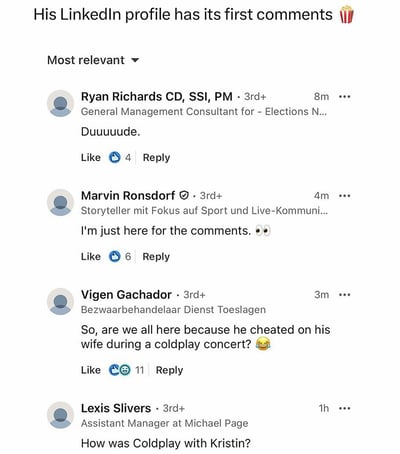
The video’s anonymity gave the internet permission to turn this into more than a tabloid story. Once the public discovered the man in the video was a corporate CEO, the moment became a collective narrative. Not just about infidelity or a marriage, it was about power, betrayal, workplace dynamics, privilege, and personal accountability.
And for the CEO's company, this meant a reputational crisis. When your CEO is trending for the wrong reasons, it's not just a personal problem. It’s a brand liability.

The corporate reputational risk
Customers, employees, and investors expect more from leadership than financial performance. Today’s stakeholders expect values alignment. The moment that alignment breaks, trust starts to erode.
The reputational risk for the CEO's company wasn’t just infidelity. It was the values gap — the inconsistency between what a company says and how its leaders behave.
Stakeholders expect executives, especially those who are public-facing, to embody the brand’s values on and off the clock.
When that expectation is violated, the headlines write themselves.
Three lessons every company should take away
- You can’t control what goes viral, but you can control your company's readiness for crises.
If you don’t have a plan for how to handle a viral moment, you’re behind. Crisis planning isn’t optional in the age of TikTok. Our 10 steps for crisis communications planning outlines how to build and activate a proactive response strategy. - Values must match visibility.
The higher the profile of your executive team, the higher the standard of behavior. Whether they like it or not, your leaders represent your brand at all times. If your brand promotes integrity, transparency, or trust, your executives must embody those values consistently. - Transparency beats silence.
When you don’t speak up, others will speak for you. And they won’t be generous. If you wait too long, people will interpret your silence as guilt, indifference, or incompetence. A thoughtful, honest, and swift response to a crisis is almost always better than trying to hide.
Reputation lives and dies at the speed of social
Today, corporate reputations are made or destroyed in seconds. A single video at a concert can generate millions of impressions before you draft your first press statement.
You may not be able to stop a viral video. But you can prevent a reputational crisis.
What matters most is your company's crisis communication and whether your response matches the values you claim to represent.
Because in today’s world, your brand isn’t what you say it is. It’s what people see, share, and believe it to be.
Do you need expert guidance for your company’s crisis communication strategy? Take a proactive approach with CrisisPoint to protect your brand from harm.
See also:
- 10 steps for crisis communications planning
- Our apology model
- When a viral concert clip becomes a corporate, CEO, and marriage crisis
Topics: crisis communications



Comment on This Article