 Google continues to refine how we interact with information online. Two tools that play a big part in this are the Google Knowledge Panel and the Google Knowledge Graph. At first glance, they may seem like similar features, but they serve different purposes and understanding how they operate can significantly influence a business's digital strategy.
If you’ve ever searched for your favorite celebrity or a trending brand on Google, there’s a good chance you’ve noticed a quick summary box on the right side of the results. That’s just one example of how these tools appear in the search experience. So how do they help users and businesses? Clarifying the distinction between the Knowledge Panel and Knowledge Graph can open up new opportunities for strengthening your online presence and credibility.
What is the Google Knowledge Panel?
The Google Knowledge Panel is the box that appears on the right side of search results when looking up individuals, organizations, or events. It gives users an instant snapshot of information. This content includes names, descriptions, images, key facts, official websites, and social profile links. Essentially, it’s a digital business card generated by Google.
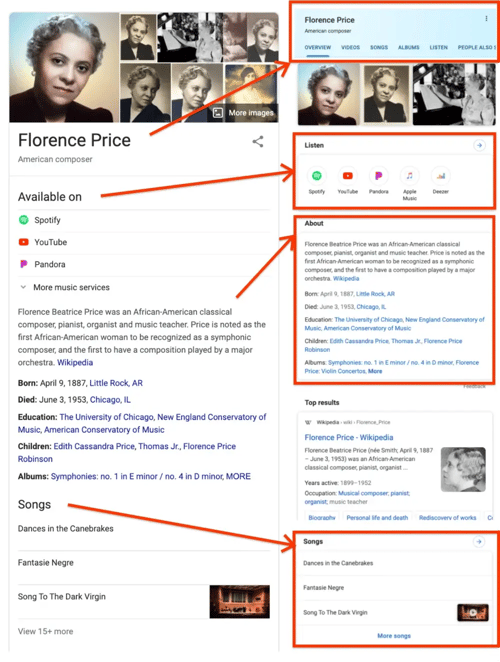
The information reflected in the Knowledge Panel is pulled from trusted sources like Wikipedia, official websites, and verified online databases. It focuses on delivering direct answers with as much accuracy as possible. For people searching, this curated presentation means fewer clicks and more immediate access to key details.
From a business standpoint, showing up in a Knowledge Panel can boost perceptions of authority and trustworthiness. Whether you run a local service business or manage a national brand, standing out in search results with a structured and official-looking presence helps drive credibility. Google updates the content regularly to reflect the most accurate snapshot of the entity, which makes maintaining control over your verified platforms even more valuable.
Activating and optimizing a Knowledge Panel often starts with establishing your presence on Google through a Google Business Profile, maintaining consistent business information across platforms, and ensuring your brand is featured on notable websites. When Google recognizes your entity as notable and confirms your data from various sources, you increase your chances of appearing in the panel.

What is the Google Knowledge Graph?
The Google Knowledge Graph is the behind-the-scenes database where Google connects the dots between millions of entities on the internet. Think of it like a massive map where people, places, things, and concepts are all linked in a web of relationships. Instead of just matching your query with keywords, it uses context and associations to understand what you're really looking for.
This system allows Google to display more than just links to relevant websites. It can proactively offer related suggestions, rich snippets, and visually enhanced features like carousels or dynamic listings. For example, a search for “best science fiction movies of the 1990s” would not only return articles but also show direct movie titles, release dates, and cast info — all powered by the Knowledge Graph.
Its sources are diverse. The Knowledge Graph taps into publicly available data, licensed content, Google partners, and crowdsourced information to build a reliable network. Through continual updates, it helps Google stay ahead in delivering a smarter and more responsive search experience.
For businesses, the Knowledge Graph plays a critical role in aligning your content with user intent. The more Google can understand about how your products or services relate to broader concepts, the more likely it is to feature relevant elements from your ecosystem in searches. This makes your content easier to find, more contextual, and better suited to answer real-time user questions.
Key differences between the Google Knowledge Panel and Google Knowledge Graph
Understanding the differences between the Knowledge Panel and Knowledge Graph allows companies to prioritize efforts and manage expectations more effectively. Here are the key distinctions:
1. Purpose and functionality
The Knowledge Panel is designed to highlight a specific entity, offering a quick-reference snapshot. On the other hand, the Knowledge Graph’s primary function is to create relationships between various entities to enhance how search results are presented.
2. Information generation
The Panel relies heavily on curated sources for accuracy and simplicity, often pulling straight from Wikipedia or official websites. The Graph works more dynamically, blending data from a mix of relationships and using machine learning to make associations.
3. Display style
Knowledge Panels appear as a separate section, usually to the right of your Google results, and focus on one subject. The Knowledge Graph influences regular search listings by enriching them with extra information, such as related topics, categories, images, or additional resources.
4. Example
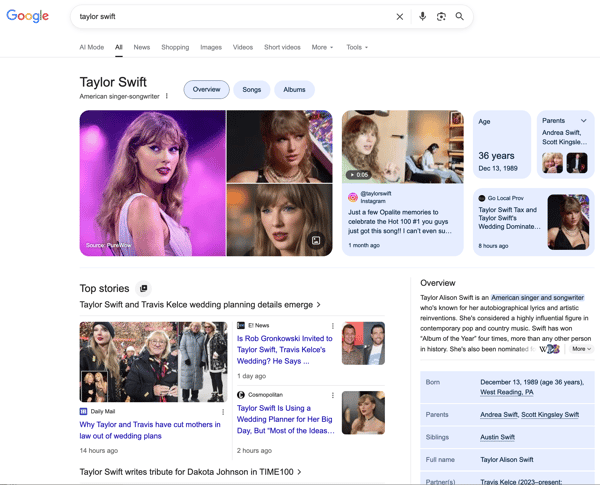
Searching for “Taylor Swift” brings up a Knowledge Panel with her bio, social links, and career highlights. Searching for “pop music” leans on the Knowledge Graph, providing deeper context about its history, notable artists, and playlists or trending songs.
How these tools benefit your PR strategy
From a public relations perspective, both tools offer strong opportunities for building brand trust, reinforcing visibility, and enhancing authority in your niche. Here's how:
Boost visibility
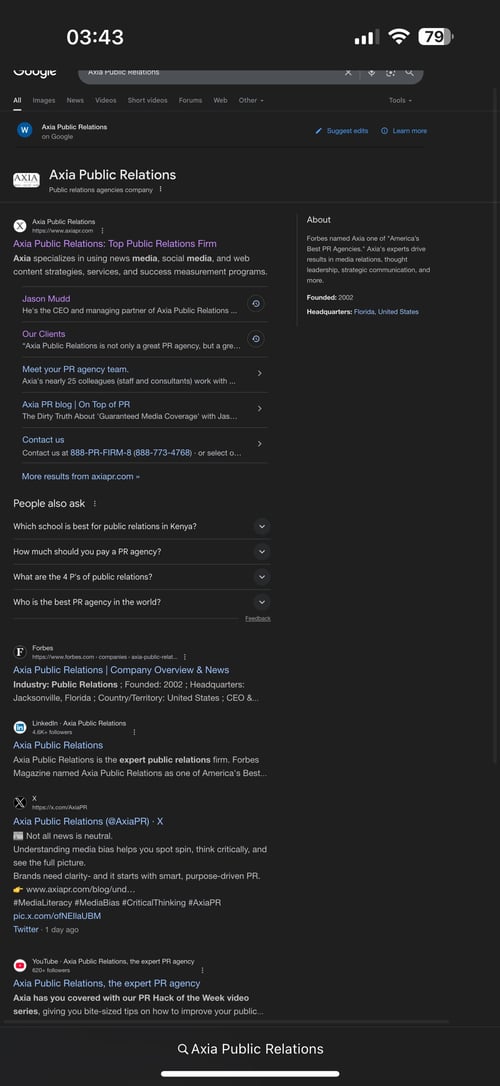
A Knowledge Panel gives direct exposure to key facts about your business. Potential customers can see your contact details, logo, and links without scrolling through results. The Knowledge Graph supports broader discovery by linking your brand to related topics through context-driven search enhancements.
Enhance credibility
Being featured in one or both of these tools shows your business has achieved a certain level of authority, making it more likely that users will trust your content. Google’s algorithms don’t place just anyone in these features. They reward consistency, accuracy, and relevance.
Optimize digital strategy
Structured data markup plays a major role in helping Google understand your site and its relevance to certain topics. Keeping your Wikipedia page updated, securing citations from reputable websites, and maintaining an accurate Google Business Profile all contribute to stronger visibility.
Looking ahead into 2025, businesses choosing to align their digital presence with these tools will be far better positioned to attract attention in a crowded online environment. Consumer behavior continues moving toward instant answers. That means your information should already be where people expect to find it.
Maximizing your presence on Google’s Knowledge tools
Taking advantage of both the Knowledge Panel and Knowledge Graph begins with setting the foundation and staying proactive. Here are some techniques to strengthen your position:
1. Maintain consistent NAP (Name, Address, Phone) data
Make sure this core business information is uniform across your website, Google Business Profile, and third-party listings.
2. Build out your Wikipedia and Wikidata entries
These are often key sources for Google's knowledge systems. Ensure your pages are accurate, regularly updated, and cite reliable references.
3. Add structured data markup
Add schema markup for local business, organization, product, and article types throughout your website.
4. Earn credible mentions
Get listed or mentioned in industry directories, news articles, and blogs that have strong domain authority. These references help validate your business as noteworthy.
5. Create high-quality, relevant content
Aim to publish articles, FAQs, and case studies that reflect what your audience is searching for. This aligns your site with Knowledge Graph keywords naturally.
6. Stay engaged with Google tools
Use your Google Business Profile actively. Encourage reviews, comment on ratings, and add updates to show that your business is consistent and reliable.
Harnessing Google Knowledge tools for your business success
Understanding the difference between the Google Knowledge Panel and the Google Knowledge Graph is more than a lesson in technical terms. It’s about equipping your business with the right strategies to enhance your visibility and earn trust. While the Knowledge Panel makes your brand pop with a clear, concise profile, the Knowledge Graph connects your offerings in relevant searches that users value.
As more people rely on search engines for recommendations, updates, and insights on who to trust, now is the time to align your digital assets. By taking control of your brand’s presence in Google's framework, you’re not just improving your online image, you’re opening new paths to reach audiences in smarter, more impactful ways.
Want to put your website on the first page of Google results but don't know where to start? Just ask our expert team at Axia Public Relations how we can help.
Topics: PR tips



Comment on This Article