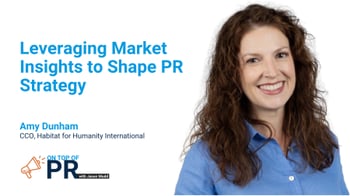
In this episode, Habitat for Humanity’s Amy Dunham joins host Jason Mudd to discuss how organizations can use market insights to shape PR strategies.
Tune in to learn more!
Short Guest Bio:
Our episode guest is Amy Dunham, chief communications officer at Habitat for Humanity International. Overseeing the organization’s global brand, marketing, and communications strategy, she helps reach audiences across all 50 U.S. states and more than 70 countries. Amy is a seasoned communications leader passionate about using market insights to shape strategy and strengthen engagement worldwide.
Listen to the episode here:



5 things you’ll learn during the full episode:
- How to leverage market insights to shape and guide PR strategy
- The balance of art, science, and passion in effective strategic planning
- Practical ways communicators can advocate for audiences at the strategy table
- How messaging and strategy must stay in lockstep to maintain credibility and consistency across audiences
- How brand perception gaps create opportunities for stronger audience engagement
About Amy Dunham
Amy leads Habitat for Humanity’s brand, marketing campaigns, and communications efforts across its global footprint in all 50 U.S. states and in more than 70 countries. Before joining Habitat in 2022, she held brand and communications roles at the NCAA, the U.S. Department of Homeland Security, and US Airways.
Watch the episode here:
Quotables
- “The human brain always absorbs things best in threes. And communications know if you’ve got 15 priorities, you have no priorities. When setting priorities, it has to be a clear way to say yes and to say no. If it doesn’t give you the ability to say no, then it’s not really helping you set a strategy.” — Amy Dunham
- “You can't have good communication or public relations strategy without messaging. They're in lockstep together.” — @JasonMudd9
- “To really stand out in PR, whatever you're doing, is to make sure you're saying things that are provocative, contrary, and have a unique point of view from what everybody else is saying because otherwise, you're just going to blend in and not stand out.” — @JasonMudd9
- “It's not a conversation about ‘I know better’ versus ‘you know better.’ It's much more about ‘Here's what the data indicates, and now here's the flexibility to be able to use it in the way that works best in your market.’” — Amy Dunham
- “It's really through the lens of ‘How can I add value in a way to enable their work?’ rather than to direct how things should get done.” — Amy Dunham
If you enjoyed this episode, please take a moment to share it with a colleague or friend. You may also support us through Buy Me a Coffee or by leaving us a quick podcast review.
Resources
Episode Resources:
- Amy (Kudwa) Dunham on LinkedIn
- Habitat for Humanity website
- Fact Fullness by Hans Rosling
- Crucial Conversations
Additional Resources from Axia Public Relations:
Disclosure: One or more of the links we shared here might be affiliate links that offer us a referral reward when you buy from them.
Our On Top of PR sponsors:
- Production sponsor: Axia Public Relations, one of America’s Best PR Agencies, according to Forbes Magazine
- Coffee sponsor: Fans like you fuel our efforts through Buy Me a Coffee.
About your host Jason Mudd
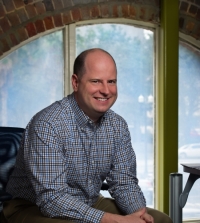
The World Communication Forum named Jason Mudd as North America’s top PR leader.
He is a trusted adviser and dynamic strategist to some of America’s most admired and fastest-growing companies. His past PR clients include American Airlines, Budweiser, Dave & Buster’s, General Electric, H&R Block, Hilton, HP, Miller Lite, New York Life, Pizza Hut, Southern Comfort, and Verizon.
He’s the CEO and managing partner of Axia Public Relations. Forbes Magazine named Axia as one of America’s Best PR Agencies.
Jason is a professional public speaker, accredited public relations practitioner, published author, podcaster, and entrepreneur. CNN, Entrepreneur, Forbes, The New York Times, National Public Radio, PRWeek, and The Wall Street Journal have quoted Jason as an expert public relations strategist.
Find more On Top of PR episodes on:
Transcript
00:00:00:00 - 00:00:23:20
Amy
The human brain always absorbs things best in threes. And communicators know this. Know if you've got 15 priorities you have no priorities. And so it's really important. And I really find that a nonprofit every program helps someone. So it's really hard to say no. So when setting priorities it has to be a clear way to say yes and to say no.
00:00:23:22 - 00:00:28:25
Amy
Because if it doesn't give you the ability to say no, then it's not really helping you set a strategy.
00:00:28:25 - 00:00:38:24
Announcer
Welcome to On Top of PR with Jason Mudd.
00:00:38:24 - 00:01:09:18
Jason
Hello and welcome to On Top of PR. I’m your host, Jason Mudd. I'm with ABC of public relations, and today we're joined by Amy Dunham, who is chief communications officer for habitat for Humanity International. Amy leads habitat for humanity brand marketing campaigns and communication efforts across its global footprint in all 50 states and in more than 70 countries before joining habitat in 2022, she held brand and communication roles at the NCAA, the US Department of Homeland Security, and U.S. Airways.
00:01:09:18 - 00:01:12:07
Jason
Amy, welcome to on top of PR.
00:01:12:09 - 00:01:14:03
Amy
Hi, Jason. It's great to be here.
00:01:14:05 - 00:01:25:11
Jason
Yeah, great to be here. I'm glad to be here. Excited to talk to you. And goodness, all 50 states and more than 70 countries. I'm sure you've got a team of hundreds that works with you, right?
00:01:25:14 - 00:01:33:10
Amy
Oh, wouldn't wouldn't that be amazing? No. We've got a team of about 75 stationed all over the world, and we keep pretty busy.
00:01:33:12 - 00:01:45:15
Jason
Yeah, I would imagine it sounds like that. So tell me, your team of how many of you said about 75, 75. Okay, so that's like one per country, almost.
00:01:45:17 - 00:01:56:16
Amy
Thankfully, we do have national organizations in the countries, but that a lot of them need a lot of support, on program measurement and descriptions and stuff. So, yeah, it keeps us pretty busy.
00:01:56:19 - 00:02:03:20
Jason
Yeah, I would imagine. So, walk our audience through briefly kind of how your team is organized.
00:02:03:22 - 00:02:27:07
Amy
Sure. So we're broken down into two key parts, aligned with what our mission is as a division, which is to bring new hearts and minds to the mission and also to engage and inform the audiences that are already engaged with habitat for humanity. So on the global network communication side of things, that's where we really talk about talk to our family.
00:02:27:07 - 00:02:58:02
Amy
So that's our employee communications as well as our network. And so across the 50 states we have nearly a thousand affiliates. So communicating with that group plus our 45 affiliates in Canada, and then also the, the global network around the world. So also in there, we've got our social media team, our PR team, and our team that supports the Habitat restore, which is our kind of our charity shops, where you can get, home design and home building materials at a deep discount.
00:02:58:05 - 00:03:18:22
Amy
And then over on the other side on the strategic communications and marketing side, we've got photo video, brand content, our magazine, digital media, as well as kind of partner activation. And, our big project that we manage out of global communications is the Jimmy and Rosalynn Carter Work Project, which is our big bill that we've been doing for over 40 years around the world.
00:03:18:25 - 00:03:27:19
Jason
Wow. Awesome. So you're really overseeing quite a bit of what some people might consider to be traditional marketing as well.
00:03:27:21 - 00:03:45:17
Amy
Yeah. It's, it's a it's a fun remit because the brand is a big part of habitat here in the U.S we're really well known, not necessarily well understood, but I find anytime I'm out in the wild wearing a habitat logo, people have a tendency to make a noise like I just showed them a puppy, so it's really wonderful.
00:03:45:17 - 00:04:03:03
Amy
But people don't know a lot about the organization and the breadth of the work that we do. So a lot of it is about how do we actually get people to understand the breadth of the work that we're doing, whether it's, you know, microfinance in sub-Saharan Africa or land ownership rights for women in Myanmar, there's a lot that we do that people don't know about.
00:04:03:03 - 00:04:07:06
Amy
So some of that you have to kind of jump in front of people to to make sure they know about it.
00:04:07:08 - 00:04:31:00
Jason
Well, you're reminding me one of my first projects as an intern was to, basically, promote the involvement of, NFL athletes in a home building, project on, you know, on a Saturday during the off season. And, obviously that was a lot of fun and very memorable for me. And lining up the interviews and lining up the photography and and that kind of thing for it.
00:04:31:00 - 00:04:36:10
Jason
So I'm sure not all of your events have NFL players involved. But, you know.
00:04:36:17 - 00:04:39:21
Amy
A lot cooler if it did. But you're right. Certainly not.
00:04:39:24 - 00:04:58:14
Jason
Yeah, exactly. Well, good. Our topic today is leveraging market insights to shape strategy. And I know we've got like, three points we want to talk through. And as we're talking throughout this conversation, I'm sure other things will come up quick. Shout out to our mutual acquaintance Chris Chimes for the, referral for you as a guest.
00:04:58:14 - 00:05:14:15
Jason
I really appreciate it when, good guests refers to other good guests. And of course, we expect that our best guests are going to know other guests to bring on the show as well. And we'll be sure to put a link to the episode notes of the episode we did with Chris Chimes from, Carnival Cruise Line.
00:05:14:15 - 00:05:17:02
Jason
So. And you and Chris used to work together, right?
00:05:17:04 - 00:05:26:17
Amy
We did at U.S. Airways and at Burson-Marsteller Public Relations, and I was actually an intern in his office in American Airlines, when I was in college as well.
00:05:26:20 - 00:05:27:04
Jason
Okay, nice.
00:05:27:05 - 00:05:28:15
Amy
We go way back.
00:05:28:17 - 00:05:33:20
Jason
Nice. And so, obviously you kept working together. So that must have been okay.
00:05:33:23 - 00:05:47:22
Amy
He's incredible. I learned so much from him, and he he's one of those people that he can do more with five words that than most people can do with 100. So he is he's my forever inspiration on using words well and being clear and concise.
00:05:48:00 - 00:06:04:06
Jason
Nice. Excellent. Yes. He speaks very highly of you as well. So the first thing we wanted to talk about was internal stakeholders views and aspirations and how it often discounts the current state. Why don't we talk through that a little bit more? And, I'll ask you some follow up questions.
00:06:05:03 - 00:06:38:19
Amy
So we were doing a brand refresh over the last 18 months or so at habitat, and we were also updating our overarching strategy, the organizational strategy, for the next three years. And it was really interesting to be doing those two things at the same time. And so as we were doing the first phase of the brand refresh, there's a lot of discovery and that, of course, and doing a lot of interviews with key stakeholders internally and getting a sense of that where they want to go, because of course, you want your brand and your communication strategy to really align with the direction that the organization was going.
00:06:38:19 - 00:07:05:21
Amy
And it became clear pretty quickly that some of the folks that had come in from the more I NGO, the international non-government organization space, had aspirations for habitat to to feel very different in the market than we currently did. And so it's really important to calibrate early on that we're not 18 years old and going off to college across country, so deciding to go by our middle name is not a great call for a very strong brand.
00:07:05:21 - 00:07:25:27
Amy
So we need to be much more reflective of where we are in the market and taking audiences on a journey, rather than trying to show up materially differently and suddenly be like, we're a research entity rather than the home builder you've known us to be. So it was really helpful to be having those conversations about the brand. At the same time, we were talking about the strategy.
00:07:26:00 - 00:07:49:04
Jason
And so again, our topic today is leveraging marketing market insights to shape strategy. And really ultimately, I mean, you can't have good communication or public relations strategy without messaging. And so, you know, sometimes I merge the two together when I'm talking and advising clients. Well, let's focus on our strategy and our messaging. And I feel like they can't go, you know, they they're in lockstep together.
00:07:49:04 - 00:08:05:08
Jason
You can't have a strategy of this, but your messaging is that, it's very similar when we're advising publicly traded companies, it's like, well, let's get the investor relations team involved, you know, because what we're saying to Main Street needs to be consistent. What we're saying to Wall Street and, you know, you can't be fragmented like that.
00:08:05:08 - 00:08:15:16
Jason
It's somewhat what I think you're kind of describing as well is you obviously have to make sure your internal stakeholders are on the same page of ultimately what your audience wants.
00:08:15:18 - 00:08:39:19
Amy
Yeah, very much so. And what it really boiled down to is that they were really focused on this space that we needed to occupy that, that we didn't yet and unintentionally not speaking about the space that we were already occupying. Well, so it it ended up being they didn't intend to discount the work that we're doing to build around the world and finance homes and repair homes.
00:08:39:21 - 00:08:56:10
Amy
They were thinking about the knowledge gaps out in the world. So as they talked about their aspirations, they were taking as a given that we would continue to do the things that we've long been doing, but not acknowledging that the audience doesn't even know that we do those things. Now, a lot of people think that habitat gives away homes.
00:08:56:12 - 00:09:19:11
Amy
So our research, we were able to show data that showed they don't even know that we give mortgages, that we are a mortgage lender as well. So let's not take that as a given. We need to bring people on that journey before we can then take them on the next step. So it was really about don't take for the things they take as givens that we were able to demonstrate through the market data that they were actually not given yet.
00:09:19:14 - 00:09:29:04
Jason
That would be interesting. Because as I said earlier, I'm I have some familiarity with your organizations and very familiar with the mortgage concept, but maybe others aren't.
00:09:29:06 - 00:09:47:14
Amy
Yeah, we really find that people, they make a sound like you show them a puppy when you say habitat. But then beyond that, they're like Jimmy Carter and you give away houses, right? So then was like, actually no one where we actually operate internationally when people when I tell people that I'm with Habitat International, they're like, oh, is that a new thing?
00:09:47:16 - 00:10:07:02
Amy
It's like, no, actually, since 1976 when we were founded, we have been international from the outset. But people's experience is really with their local affiliate, where they go out and build and that opportunity to participate is really our special sauce. So it's not to discount that at all. Just what people participate in is part of our work, but not the whole breadth of our work.
00:10:07:02 - 00:10:13:22
Amy
And so really, that's where the messaging and the branding needs to come in, where we need to invite people in that broader journey to participate.
00:10:13:24 - 00:10:16:26
Jason
On 1976 was a great year because that's the year I was born.
00:10:16:26 - 00:10:18:01
Amy
So, hey, all right.
00:10:18:03 - 00:10:19:15
Jason
Now I'll always remember.
00:10:19:17 - 00:10:22:29
Amy
Yeah, we've got a big birthday coming up in next year.
00:10:23:02 - 00:10:24:09
Jason
So,
00:10:24:11 - 00:10:27:26
Amy
We have a video forever 29.
00:10:27:28 - 00:10:49:26
Jason
That's right. I would hope so. Right. Well, good. So, you know, we mentioned strategy and messaging going hand in hand together. We also want to talk about how strategy is an art, science and a passion and bringing data to, you know, debates. So tell me more kind of about your, your theory or philosophy around that.
00:10:49:29 - 00:11:19:04
Amy
So when strategy is something that people get really excited about, and rightly so, it's the direction of the organization. And particularly for my experience working for mission driven organizations, people are really invested in that mission. I mean, I make the comment that when we're wearing habitat shirts, it goes right through the fabric, right onto people's hearts. And so it's wonderful that people are invested, and in nonprofits that have grassroots starts, big personalities have a tendency to drive things.
00:11:19:06 - 00:11:45:08
Amy
And so we've had two CEOs in the entire, time of our organization, the founder and then, Jonathan Rickford, who's celebrating 20 years, in just two months and August of 2025, he'll be here. He'll have been here for 20 years. And so a lot of perspectives on where we've been and where we should be, but also some new leaders who don't have the perspective on where we have been already and what we've tried and what works and what doesn't in the housing and nonprofit sectors.
00:11:45:08 - 00:12:06:17
Amy
So when we can bring the data on. Well, actually, Harvard does a lot of great research in the United States, through their joint housing center. We don't need to compete with Harvard on research in the United States. That is not a place for us to to play and win. So we're really trying to focus on where is the white space and really bring that kind of market analysis.
00:12:06:19 - 00:12:29:19
Amy
But then also what is the kind of language that resonates? There's a lot of jargon within any industry. And the nonprofit industry is not immune to that. And so one of the things that we found in our benchmarking was that a lot of the words, as nonprofits try to describe their broader impact, the words have gotten very repetitive and they feel vague and jargony to the public.
00:12:29:19 - 00:12:48:16
Amy
And so sounding like everyone else is actually not a good thing to do. And certainly anybody who's a communications professional knows that to be true. But bringing data to back that up was something that was really helpful to inform those early conversations around strategy and the direction we needed to go and the stories we told ourselves internally, not just externally.
00:12:48:18 - 00:13:08:13
Jason
100%. Before we press record, you and I were chatting and I mentioned that I did a keynote presentation today, and one of the things I told the audience is, you know, to really stand out in PR, whatever you're doing, you know, is to make sure you're saying things that are provocative, contrary, and, and have a unique point of view from what everybody else is saying, because otherwise you're just going to blend in and not stand out.
00:13:08:15 - 00:13:24:21
Jason
And in this particular context, you're not going to be quoted, you're not going to be remembered. And so, you know, you really have to say something that's going to help you stand out. Going back to your comment about data, a quote or saying I use all the time is if we have data on this, let's follow the data.
00:13:24:24 - 00:13:49:07
Jason
If we don't have data, let's follow your recommendations. Right. So it's just kind of a a way of, of specifying that, look, you know, data is where we're going to lead us and direct us, but the backup is going to be our gut instincts. Right. And so I love that, you know, when we have data to work with, when we pursue data, you know, whether it's third party or other type of research, you know, if you've got it, just use it.
00:13:49:09 - 00:13:52:19
Jason
You know, you don't have to wing it. So I like that a lot.
00:13:52:22 - 00:14:18:29
Amy
Well, in the dynamic we face in a federation, because habitat in communities all across the United States are individual five and one C3, with their own individual boards. So when I roll out an updated messaging platform or brand platform, I can't be directive and say, this is what to use. I have to demonstrate the value and back it up with data, because they have their own experiences in their own community as to what works best to get people to engage with habitat.
00:14:19:01 - 00:14:39:23
Amy
And so I think data is important to those conversations about what tests? Well, but then give them the ability to look at the data themselves and then evaluate it. So it's not a conversation about, I know better versus, you know, better. It's much more about here's what the data indicates. And now here's the flexibility to be able to use it in the way that, you know, works best in your market.
00:14:39:26 - 00:14:47:14
Jason
I love that that's, that's good. And so real quick, just for our audience, let's define what federation is, what federation means.
00:14:47:17 - 00:15:13:29
Amy
Yes. So a federation there said there's there's federations and confederations and associations. And for whatever reason, I found myself working in the federation and association space for the last 15 years, perhaps because I'm sick in the head. But a federation, it is individually, it's independent organizations that try to work interdependent with a shared brand but separate finances, through an affiliation agreement.
00:15:13:29 - 00:15:36:25
Amy
So we have affiliation agreements that all of our affiliates in the United States and then at the country level in some branches, I won't get to in the weeds. But, then so it's so habitat for Humanity International is a five and one C3. We're headquartered in Atlanta. And then the federation is the 70 countries and the nearly a thousand affiliates across the United States.
00:15:36:27 - 00:16:05:09
Jason
So collaboration is obviously very important. And also, as you described earlier, you know, to bring data and collaboration and consensus and, rationale for some of the decisions you're making to help make sure that everybody's not only feeling heard and feeling included, it's to be able to sing well from the same song sheet and, and all kind of just get along and, and understand the what's in everybody's best interest.
00:16:05:09 - 00:16:10:06
Jason
Is that kind of a balance that you have to, manage on a daily basis?
00:16:10:08 - 00:16:33:01
Amy
For sure. I'm always thinking about what's the value proposition that I bring, what am I doing to help our network work smarter rather than harder? I could never do the job of an executive director or national director for habitat for humanity. They are running five businesses before lunch every day, right? You know, mortgage lenders and volunteer management and navigating zoning and government relations.
00:16:33:01 - 00:16:42:13
Amy
It is so unbelievably complex. Construction management, all of that. It's deceptively complex and they're doing amazing work. I couldn't do that.
00:16:42:16 - 00:16:43:14
Jason
Yeah.
00:16:43:16 - 00:17:07:13
Amy
But I've been doing federated communications for 15 years. So how can I add value in a way that I don't need to ask them to be able to do? So? How can I deliver a brand platform and a messaging framework that makes their job easier by giving them flexibility. And so it's really through the lens of how can I add value in a way to to enable their work, rather than to direct how things should get done?
00:17:07:13 - 00:17:16:22
Jason
This episode is brought to you by Audible. Enjoy 30 days free of Audible Premium Plus by going to ontopofpr.com/audible.
00:17:16:22 - 00:17:41:09
Announcer
You're listening to On Top of PR with your host, Jason Mudd. Jason is a trusted advisor to some of America's most admired and fastest growing brands. He is the managing partner at Axia Public Relations, a PR agency that guides news, social and web strategies for national companies. And now, back to the show.
00:17:41:09 - 00:17:56:22
Jason
Let’s pivot to talking about setting organizational priorities. You know, we're we're kind of, leaning into that or leading towards that right now naturally and organically with our conversation. But, you know, when you set organizational priorities, what are some of your recommendations?
00:17:56:26 - 00:18:20:16
Amy
The human brain always absorbs things best in threes. And communicators know this. Know if you've got 15 priorities you have no priorities. And so it's really important. And I really find that a nonprofit every program helps someone. So it's really hard to say no. “So when setting priorities it has to be a clear way to say yes and to say no.
00:18:20:18 - 00:18:25:21
Amy
Because if it doesn't give you the ability to say no, then it's not really helping you set a strategy.”
00:18:25:21 - 00:18:46:18
Amy
So really being disciplined and everybody wants prioritization until everything has been prioritized. So just being willing to have some of those tough conversations is is really the most important thing. Have those at the leadership level to make sure that you're really distilling it down in a way that people can absorb internally and not have to code switch between the story they're telling internally and externally.
00:18:46:21 - 00:19:16:09
Jason
Yeah. You know, you're hitting all my, love languages here with the you know, talking in threes and staying audience focused and all all of that. Because that's really what you know, I think good communications based on research and science tells you, you know, how to move forward. So, I just want to make sure we spend enough time on, on this particular element of, you know, setting organization priorities that advocate for clear, consistent audience focused language from the onset.
00:19:16:12 - 00:19:21:17
Jason
And then internal rallying cries become taglines quickly. What do you mean by that?
00:19:21:19 - 00:19:45:00
Amy
So what happened at habitat? And I'll be vulnerable here with with a mostly communicator audience. There started to be an internal rallying cry because everybody knows that habitat build, but people don't know much about the other work that we do. We do a lot of work around helping change outdated laws and policy advocacy and, you know, advocating with the G7 and with US Congress and stuff like that.
00:19:45:02 - 00:20:07:18
Amy
And so this internal, this internal rallying cry about we build and we influence started developing and people got really excited about it because it helped them think in new ways about like, yeah, this is what we do in parallel, I'm doing this research that's indicating that actually broadening the definition of build and inviting people to participate, because that's our special sauce that we should define.
00:20:07:18 - 00:20:29:21
Amy
Everything we do is participating in a build. And frankly, there are some countries in the world where you cannot go in and say that we want to influence because it's not their authoritarian government, and that'll get you kicked out of the country. Right. But it became this rallying cry. And I remember I went to an event in a country that shall not be named, and I stepped out of an elevator to walk into their, like, anniversary gala.
00:20:29:24 - 00:20:52:03
Amy
And on a big step and repeat, it said, we build and we influence. And I was like, oh dear. And it had crossed the Rubicon into being language that they were using with donors and staff at a public event. So that was the point at which I was like, I let this get away from me. And so I had to sit down with the rest of the executive team and say, like, we have to actively nipped in the bud and say, this is not going to be the name of the strategy.
00:20:52:03 - 00:21:17:27
Amy
This is not going to be our new brand platform. And it's because that we shouldn't be code switching between what we say internally and what we say externally. So that was that was one that I was it was a learning that I as soon as I saw it become a thing, I should have named it and nipped it sooner, because I'm sitting here at my desk with you writing in my notebook that I'm using still has that embossed on the front, from a couple years ago.
00:21:17:29 - 00:21:45:24
Jason
Okay. Well, you know, that's what I love about this profession is we can get better every day. And, you know, there's, you know, I'm reminding myself every day this year that, perfectionism slows you down. But at the same time, you know, in hindsight, you know, you see things with fresh eyes or a different perspective. And so you know, I think my team probably hates it when they show me something, because then I see it again and I'm like, oh, wait a minute, I had another idea, or I slip on this and I thought about this perspective or whatever.
00:21:45:24 - 00:22:06:24
Jason
And so, you know, I think there is something to be said about constant improvement. But at the end of the day, you know, what is it? What's the saying? Perfect. Is the enemy of dung. And so sometimes we just have to move forward and, you know, write down notes of what we want to do different next time or next year and, and just continue to get 1% better every day.
00:22:06:26 - 00:22:23:29
Amy
And just being willing to share it. Not everybody has to learn everything the hard way. So that's I, I tell my daughters all the time that asking for help is the strongest thing you can do, and people don't know. You got to model that by saying like, here's here's a place where I messed up, demonstrating that I need help as well.
00:22:23:29 - 00:22:34:06
Amy
And hopefully that'll that'll signal the folks on the team that asking for help and acknowledging failure means that if you fail, the world won't end. And so let's try some stuff. Let's be innovative.
00:22:34:08 - 00:22:49:00
Jason
Well, going back to perfectionism, right. The idea that, you know, if you're vulnerable with people and you tell them that you messed up, they actually trust you more than if you act, you know, if you act like or you really have your your act together, which is kind of interesting to think about, right?
00:22:49:03 - 00:23:09:01
Amy
It really is. And Simon Sinek has a great line to that effect that I won't butcher here. But but effectively, if you try to seem imperfect, if you try to seem perfect, people will look for your flaws, right? But if you ask for help and guess what? Generally speaking, if you go to another human and say, I admire what you do and I think you're good at it, will you help me?
00:23:09:04 - 00:23:13:10
Amy
Most of the time people will say, yeah, so why don't just lean into that.
00:23:13:17 - 00:23:24:10
Jason
Yeah, 100%. Well Amy, as we're wrapping up, do you have, what are you working on right now that's got you excited or feeling challenged by or looking forward to?
00:23:24:13 - 00:23:44:12
Amy
So with 2026 being Habitat's 50th anniversary, I'm really excited about the plans that we're putting together to celebrate our anniversary. I really don't want it to be a timeline celebration, so we really want to focus on all that we've been able to accomplish in our first 50 years, but then to focus on what we can get done in the future.
00:23:44:12 - 00:24:15:13
Amy
So for much of our history, habitat, if you were to try to distill habitat down to an item, I think it would be a hammer. And so what we're going to try to do with this new campaign is to really have have the item be more of a door. And all of the all of the imagery of what an open door can lead to, that a good home leads to stability and joy and dignity and building a life on your own terms are really excited to work on on that new messaging framework for for habitat going into our 50th anniversary year.
00:24:15:15 - 00:24:26:13
Jason
While on the surface, I like that a lot, obviously, I don't know all the, the nuances and rationale for, but it sounds really good. So what do the next 50 years look like for your organization?
00:24:26:16 - 00:24:47:18
Amy
Well, housing is changing really fast. Here in the United States, the whole sector has been under building since 2008, when the housing market crashed. So we've now got a huge gap, here in the United States. And it's one of the housing markets, much of the Western world. The housing markets were largely functioning up until about five years ago.
00:24:47:25 - 00:25:12:09
Amy
But now supply and demand just do not meet at all, particularly on the more affordable side. 60% of Americans can't afford a $300,000 home if you can even find one. And then more globally, 1 in 3 people on earth don't have access to a safe, decent home to wake up anyway. So it's a massive problem. So scaling is going to be really we cannot build our way out of this one house at a time.
00:25:12:12 - 00:25:29:27
Amy
So we're really focused on the things that how can we? Of course how can habitat build more? How can we increase our production? We're one of the top ten private builders in the United States already, but we want to scale bigger and faster. And so that means we have some laws need to we're going to work on zoning laws so that we can build more densely.
00:25:29:27 - 00:25:46:15
Amy
So working on those sort of things in the US, microfinance, getting people access to funding, to build more around the world. So we're just really focused on scaling through innovative financing and innovative building strategies, and just trying to get more people out to volunteer and get involved in the cause.
00:25:46:17 - 00:26:06:29
Jason
100% a, material and important, challenge for our, our nation and beyond, obviously in the globe. And it sounds like you guys not only have the insight and expertise, but the appetite and passion for the cause, which is obviously very important. So thank you and your colleagues for all your hard work in that space.
00:26:07:02 - 00:26:11:11
Amy
Thanks so much. It's it's a great job and I, I can't believe I get to wake up and do it every day.
00:26:11:13 - 00:26:29:26
Jason
Yeah for sure. So as you were talking and you mentioned, you know, more density and things like that, do, does, your organization do any, like, for lack of better word, condos or townhomes where it's multi-family? But it's it's still on homeownership.
00:26:29:28 - 00:26:49:20
Amy
Absolutely. So in the United States, we really focus on homeownership. It's core of the American dream building intergenerational wealth. Absolutely. We do still build single family homes, generally speaking. We try not to have those be much bigger than 1200 or 1500 square feet, but in a lot of places where we operate, even a single family home is just.
00:26:49:22 - 00:27:12:28
Amy
Yeah. So we are building condos and townhomes, multifamily units at the Carter Work Project in, Twin Cities. Last year we were building four story homes, as well as duplexes and single family homes, you know, with solar tiles, in Austin, Texas, for the Carter Work Project. This year, we're going to be building houses that are heated by geothermal, like it's there's some really cool stuff going on across the habitat network.
00:27:13:01 - 00:27:25:02
Jason
Nice, nice. Well, Amy is again is we're wrapping up, any kind of, morning routines or books that you recommend or anything like that. Just kind of let a little more insight into you and what you are passionate about.
00:27:25:04 - 00:27:48:19
Amy
Well, I have two kids and two dogs, and my morning routine is chaos. And that's not going to be helpful to share with anybody. But a book that I recommend, two books that I recommend to everyone, one is Fact Fulness by Hans Rosling, which is really the notion about checking back in on the things that we take for granted to be true, and gives a mental model to see the world through a more, more positive lens.
00:27:48:22 - 00:28:03:18
Amy
So I love that as a communications and brand professional, but also just as a human being. Yeah. And I'm also a big advocate for the book Crucial Conversations. That training was life changing for me, not just professionally, but personally. And I recommend it to anybody who is listening.
00:28:03:21 - 00:28:11:03
Jason
Okay, awesome. Speaking of people who are listening, if, one of our audience members wants to connect with you, is LinkedIn the best way to reach you?
00:28:11:06 - 00:28:20:13
Amy
It is. I am a regular on LinkedIn. I have a tendency to creep more than I post. I know I need to get better at that. But yes, I check LinkedIn every day. That's the best way to find me.
00:28:20:16 - 00:28:21:19
Jason
Okay, awesome.
00:28:21:19 - 00:28:44:24
Jason
Well, Amy, this has been a great episode. Thank you so much for, being a great guest and sharing your smarts with our audience. And, speaking of audience, we want to thank you for tuning in to on top of PR today and allowing us the opportunity to help you stay on top of PR and in the event that you found this, episode helpful, which I'm sure you did, please take a moment to share it with any friends or colleagues you think would benefit from it.
00:28:44:27 - 00:28:46:21
Jason
We will. We really appreciate that and I think they will too. So, with that this is Jason Mudd with Axia Public Relations signing off. I hope something great happens to you today.
00:28:46:21 - 00:29:42:12
Announcer
This has been On Top of PR with Jason Mudd presented by Review Mixer. Be sure to subscribe so you don't miss an episode, and check out past episodes at ontopofpr.com.
 |

|
Topics: PR tips, strategy, On Top of PR



Comment on This Article